
"seating time"
2000 article(s) found

Introduction to the steps of siphon pot, siphon pot, coffee grams and coffee brewing
Siphon pot utensils siphon pot coffee grams steps for brewing coffee 1. Stirring stick: it is used to stir the coffee extracted in the upper seat during the cooking process-the purpose is to make the coffee extract evenly, and the method of stirring will be discussed later. two。 Measuring spoon: is used to measure coffee beans, note that coffee beans are not powder, slowly protruding a large spoon is about 10g, flat spoon is about 7G, generally siphon pot with 15g
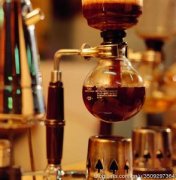
Steps to make coffee in a siphon pot at home
Step 1: select the appropriate thickness of ground beans. The practice of siphon coffee. It is suggested that the thickness of ground beans is close to that of special grains and fine sand. So just buy a small packet of extra granulated sugar and bring it back. A careful comparison of the feel between ground coffee powder and granulated sugar can be directly judged. Step 2: put the filter cloth in the upper seat of the siphon pot. Fix the position of the upper seat and filter cloth, and determine the filter cloth

A complete knowledge of siphon pot
The working principle of the siphon pot How does it work: the main principle of Syphon is to use the ideal gas equation: PV=nRT, under a fixed volume, heat the boiling water to make the steam pressure of the boiling water, press the boiling water into the upper layer to brew the coffee through the glass tube, and then cool the lower layer in a similar vacuum state to absorb the brewed coffee from the upper layer, and filter the dregs with a filter in the middle. You can take it while looking at it.
The history and usage of siphon pot
In 1840, a glass test tube in a laboratory triggered the invention of siphon coffee (Syphon). The British took the test tube used in Biya's chemical experiment as a model to create the first vacuum coffee pot. Two years later, Mrs. Bachang of France improved the kettle with a little spring in shape, and the familiar upper and lower convection siphon pot was born. Siphon coffee maker in France

The skill of siphoning coffee in a siphon pot at home
Step 1: select the appropriate thickness of ground beans. The practice of siphon coffee. It is suggested that the thickness of ground beans is close to that of special grains and fine sand. So just buy a small packet of extra granulated sugar and bring it back. A careful comparison of the feel between ground coffee powder and granulated sugar can be directly judged. Step 2: put the filter cloth in the upper seat of the siphon pot. Fix the position of the upper seat and filter cloth, and determine the filter cloth

How to use mocha pot to make boutique coffee?
The mocha pot is divided into three parts: the upper seat, the powder trough, and the lower seat. The lower seat is a sink for holding water, and the powder trough is used to hold finely ground coffee powder. The upper seat is to hold the extracted coffee liquid. When brewing, the water is placed in the lower pot and the coffee is placed in the middle of the net. when the pot is heated, it produces steam and rushes the hot water up. Pass through the coffee powder, then into the pot to form coffee. Because

Siphon pot coffee powder thickness-coffee grounds can grow succulent plants
Siphon pot coffee powder thickness-Coffee grounds can grow succulent plants to make siphon coffee, the use of hand grinder, more emotional, but also to meet the demand. Adjust the fineness before use, and control the fineness of the coffee by adjusting the gap between the rotor and the powder. If the beans fall too fast, or if they remain unchanged for a long time, they all need to be adjusted. After boiling water, begin
How to use siphon coffee to make a good cup of coffee
Step 1: choose the appropriate thickness of ground beans, which is very important for siphon coffee, and it is also the most important factor affecting whether the brewed coffee is good or not. Step 2: put the filter cloth in the upper seat of the siphon, fix the position of the upper seat and the filter cloth, and determine the filter cloth.
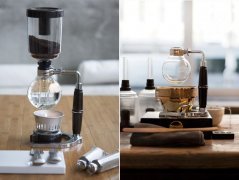
The history and usage of siphon pot
In 1840, a glass test tube in a laboratory triggered the invention of siphon coffee (Syphon). The British took the test tube used in Biya's chemical experiment as a model to create the first vacuum coffee pot. Two years later, Mrs. Bachang of France improved the kettle with a little spring in shape, and the familiar upper and lower convection siphon pot was born. Siphon coffee maker in France
History and usage of siphon pot
The history and usage of siphon coffee (plug-in brewing method) in 1840, a glass test tube in the laboratory triggered the invention of the siphon coffee maker (Syphon). The British took Biya's test tube for chemical experiments as the model to create the first vacuum coffee pot. Two years later, Mrs. Bachang of France improved this pot with a bit of spring shape, which is familiar to everyone.

Steps of making Coffee in Mocha Pot Analysis of homemade coffee: mocha pot
The mocha pot is divided into three parts: the upper seat, the powder trough, and the lower seat. The lower seat is a sink for holding water, and the powder trough is used to hold finely ground coffee powder. The upper seat is to hold the extracted coffee liquid. When brewing, the water is placed in the lower pot and the coffee is placed in the middle of the net. when the pot is heated, it produces steam and rushes the hot water up. Pass through the coffee powder, then into the pot to form coffee. Because

The history and usage of siphon pot
In 1840, a glass test tube in a laboratory triggered the invention of the siphon coffee maker (Syphon). The British took the test tube used in Biya's chemical experiment as a model to create the first vacuum coffee pot. Two years later, Mrs. Bachang of France improved the kettle with a little spring in shape, and the familiar upper and lower convection siphon pot was born. Siphon coffee pot in France

Analysis of homemade coffee: mocha pot
The mocha pot is divided into three parts: the upper seat, the powder trough, and the lower seat. The lower seat is a sink for holding water, and the powder trough is used to hold finely ground coffee powder. The upper seat is to hold the extracted coffee liquid. When brewing, the water is placed in the lower pot and the coffee is placed in the middle of the net. when the pot is heated, it produces steam and rushes the hot water up. Pass through the coffee powder, then into the pot to form coffee. Because
History and usage of siphon pot
The history and usage of siphon coffee (plug-in brewing method) in 1840, a glass test tube in the laboratory triggered the invention of the siphon coffee maker (Syphon). The British took Biya's test tube for chemical experiments as the model to create the first vacuum coffee pot. Two years later, Mrs. Bachang of France improved this pot with a bit of spring shape, which is familiar to everyone.

Self-made coffee analysis mocha pot
The mocha pot is divided into three parts: the upper seat, the powder trough, and the lower seat. The lower seat is a sink for holding water, and the powder trough is used to hold finely ground coffee powder. The upper seat is to hold the extracted coffee liquid. When brewing, the water is placed in the lower pot and the coffee is placed in the middle of the net. when the pot is heated, it produces steam and rushes the hot water up. Pass through the coffee powder, then into the pot to form coffee. Because
Siphon pot basic siphon pot history and use method
In 1840, a glass test tube in the laboratory triggered the invention of the siphon coffee pot (Syphon), and the British took Biya as a prototype for chemical experiments to create the first vacuum coffee pot. Two years later, Mrs. Baxiang of France improved the pot with a little spring shape, and the familiar upper and lower convection siphon pot was born. Siphon coffee pot in France

History and usage of siphon pot siphon coffee
In 1840, a glass test tube in a laboratory triggered the invention of the siphon coffee maker (Syphon). The British took the test tube used in Biya's chemical experiment as a model to create the first vacuum coffee pot. Two years later, Mrs. Bachang of France improved the kettle with a little spring in shape, and the familiar upper and lower convection siphon pot was born. Siphon coffee pot in France
The history and usage of fine coffee siphon pot
In 1840, a glass test tube in a laboratory triggered the invention of siphon coffee (Syphon). The British took the test tube used in Biya's chemical experiment as a model to create the first vacuum coffee pot. Two years later, Mrs. Bachang of France improved the kettle with a little spring in shape, and the familiar upper and lower convection siphon pot was born. Siphon coffee maker in France

Siphon pot brewing experience sharing Siphon pot suitable for brewing what coffee siphon pot characteristics are what?
Professional coffee knowledge exchange More coffee bean information Please pay attention to coffee workshop (Weixin Official Accounts cafe_style) I have been brewing coffee for about five years ago for more than three years. In terms of qualifications, I am very bad, but I still want to write what I have realized & learned because I write blogs to share and I have read a lot of articles about siphon teaching. Many of them only know that they are not true.
The History and usage of Coffee knowledge siphon Pot
In 1840, a glass test tube in a laboratory triggered the invention of siphon coffee (Syphon). The British took the test tube used in Biya's chemical experiment as a model to create the first vacuum coffee pot. Two years later, Mrs. Bachang of France improved the kettle with a little spring in shape, and the familiar upper and lower convection siphon pot was born. Siphon coffee maker in France